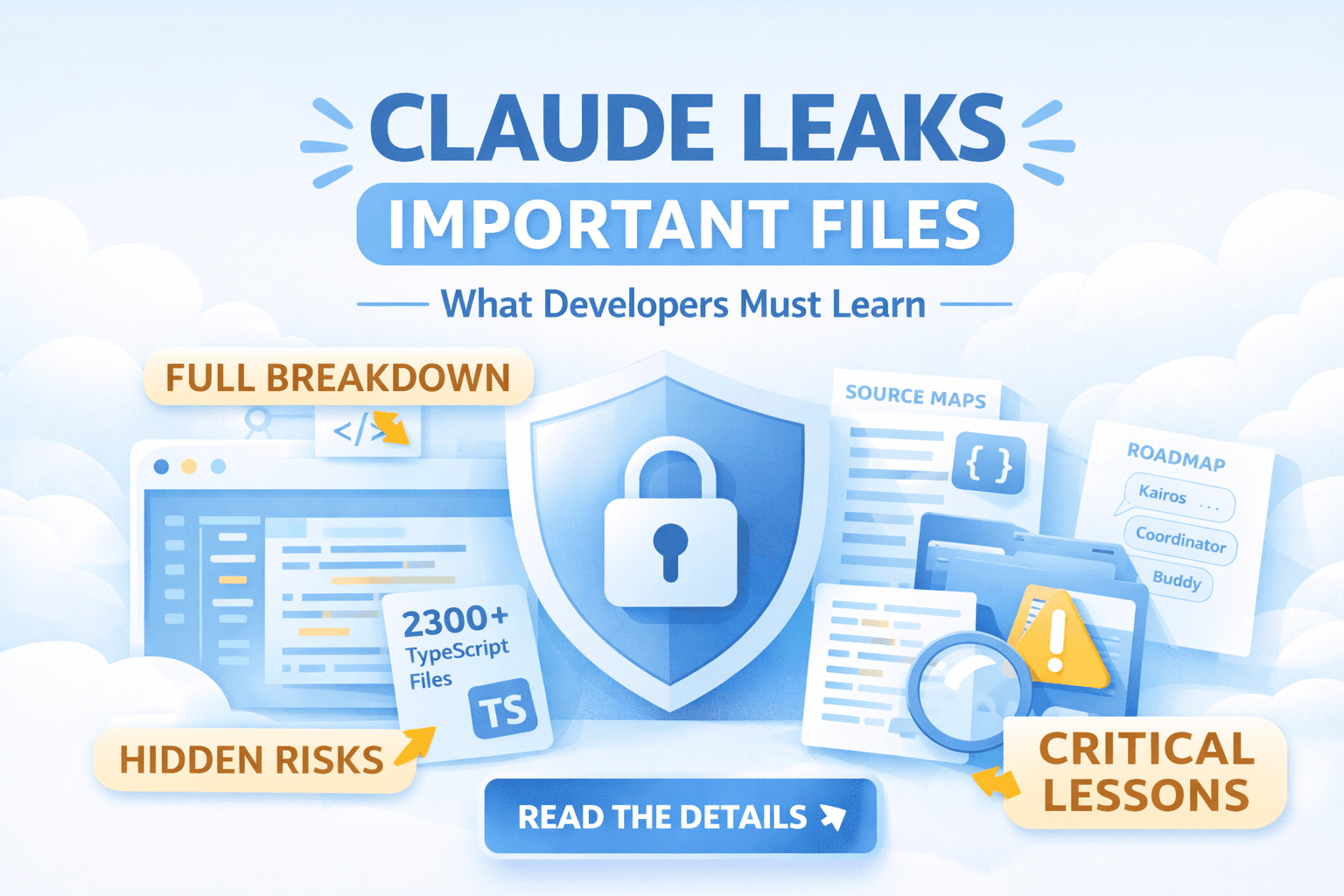
Recently, discussions surfaced around an unexpected exposure involving AI development tooling linked to Anthropic.
Why This Claude Code Incident Matters More Than You Think
While not a traditional “hack,” the situation highlights something far more important: how modern AI systems are built, deployed, and sometimes unintentionally exposed.
Let’s break down what happened — and why it matters.
1️⃣ What Actually Happened
In simple terms, certain build artifacts (commonly known as source maps) were accessible in a production environment.
These files are typically used by developers to debug applications. However, when exposed publicly, they can:
- Reveal original source code
- Show application structure
- Provide insight into internal logic
In this case, a large portion of application code became accessible without breaching any system — just by accessing publicly available resources.
2️⃣ Why This Was More Than a Typical Code Exposure
Most incidents involve partial leaks or limited access. This situation was different. It potentially revealed how an AI coding assistant operates internally, including:
- Decision-making flows
- Error-handling strategies
- Task execution patterns
- File and workflow management logic
This type of exposure gives insight into system design — not just code.
3️⃣ Signals About Future Development
Another interesting angle was the discovery of internal naming patterns and structures. These hints may suggest:
- Experimental features in development
- Modular system architecture
- Expansion toward more advanced AI-assisted workflows
While not confirmed roadmaps, such clues can indicate where AI tooling is heading next.
4️⃣ What This Means for the AI Industry
Incidents like this can influence multiple areas:
🔹 Competitors
Other companies, including players like OpenAI, may analyze publicly available patterns to refine their own tools.
🔹 Open Source Community
Developers can learn from architecture patterns and build improved or alternative solutions.
🔹 Startups
For smaller teams, this acts as a learning opportunity on how advanced AI systems are structured.
5️⃣ How Does This Happen at Scale?
Even highly advanced companies can run into basic deployment issues. Common contributing factors include:
- Rapid release cycles
- Automated deployment pipelines (CI/CD)
- Limited manual review under tight deadlines
In fast-moving industries like AI, speed often comes at the cost of oversight.
6️⃣ The Bigger Lesson
This is not about one company. It reflects a broader trend in AI development:
👉 Teams are increasingly relying on automation but reducing human oversight in critical stages. AI can generate, modify, and even deploy code — but responsibility still lies with humans.
7️⃣ What Developers Should Take Away
If you’re building with AI tools today, here are key practices:
- Always review generated code before deployment
- Avoid exposing debug or internal files in production
- Maintain secure build and deployment pipelines
- Keep human oversight in all critical workflows
🔚 Final Thoughts
AI is accelerating development faster than ever. But incidents like this are a reminder: speed without control creates risk, and automation without validation creates exposure. The future belongs to developers who can balance both.